
Oilseed Crop Protection Chemicals Market Size, Growth & Demand by 2034
Coverage: By Product Type (Synthetic Pesticides, Bio-Pesticides) ; Application (Crop Based, Oil Seeds) , and Geography (North America, Europe, Asia Pacific, and South and Central America)
- Status : Data Released
- Report Code : TIPRE00005773
- Category : Chemicals and Materials
- No. of Pages : 150
- Available Report Formats :


- Last update date : September 28, 2026


2025 Market Size
US$ 63.34 Bn
Base year value
2034 Forecast
US$ 87.56 Bn
Projected by 2034
CAGR 2026-2034
3.66 %
Growth rate
Addressable Market
US$ 685.24 Bn
(2026-2034)
The global Oilseed Crop Protection Chemicals market was valued at US$ 63.34 billion in 2025 and is expected to reach US$ 87.56 billion by 2034; it is estimated to record a CAGR of 3.66% during 2026-2034.
Oilseed Crop Protection Chemicals Market Assessment and Insights
- North America is expected to account for 24–28% Oilseed crop protection chemicals Market share in 2025 and grow at a 4.0–4.6% CAGR between 2026–2034, supported by soybean, canola, and sunflower protection programs.
- US is expected to represent 68–72% of North America in 2025 and expand at a 3.9–4.5% CAGR between 2026–2034, reflecting extensive soybean acreage and intensive input use.
- Europe is estimated at 20–24% share in 2025 and a 3.6–4.2% CAGR between 2026–2034, led by Germany, France, the UK, Italy, and Spain.
- Asia Pacific is estimated at 32–36% share in 2025 and a 4.8–5.5% CAGR between 2026–2034, led by China, India, Japan, South Korea, and Australia.
- Largest Segment Synthetic Pesticides holds a 82–86% market share in 2025 and grows at a 3.7–4.1% CAGR during 2026–2034, reflecting established efficacy and broad crop coverage.
- High Growth Segment Bio-Pesticides holds a 14–18% market share in 2025 and grows at an 8.2–9.0% CAGR during 2026–2034, supported by resistance management and regulatory preference.
- Key companies analyzed in detail: ADAMA Agricultural Solutions Ltd, Arysta LifeScience Inc., Bayer CropScience AG, Dow AgroSciences LLC, DuPont de Nemours, Inc., Isagro S.p.A., Ishihara Sangyo Kaisha, Ltd., Nufarm Limited, Syngenta International AG, Valent BioSciences LLC, BASF SE, Corteva Agriscience, UPL Limited, and FMC Corporation.
Source: The Insight Partners' analysis based on proprietary research, government publications, company annual reports, investor presentations, industry databases, and expert interviews.
Market growth has moved from broad spectrum chemical formulations to more specific solutions that take into account resistance and application efficiency. Residual herbicides, fungicides rotations, seed treatment, biologicals and trait management of weeds have become common practices amongst soybeans and canola farmers. FAO has registered 3.73 million tonnes of pesticide active ingredients applied in agriculture in 2023 and FAOSTAT statistics have been updated to 2024. Development of product has become more oriented towards efficacy, application flexibility, residue management and environmental performance.
Investment within the forecast period should focus on biologicals, low-dose active ingredients, formulation technologies and digital decision support. Additionally, Oilseed crop protection chemicals market outlook is also affected by new production areas emerging in Asia and Latin America, as well as low-risk products and integrated pest management in Europe. OECD-FAO projections for 2025-2034 include expansion and trade in oilseeds and oilseed products.
Oilseed Crop Protection Chemicals Market Report Scope
| Report Attribute | Details |
|---|---|
| Market size in 2025 | US$ 63.34 Billion |
| Market Size by 2034 | US$ 87.56 Billion |
| Global CAGR (2026 - 2034) | 3.66% |
| Historical Data | 2021-2024 |
| Forecast period | 2026-2034 |
Oilseed Crop Protection Chemicals Market Analysis
Demand is anchored in the economics of protecting high-value oilseed crops from weeds, insects and diseases that can materially reduce yield and oil quality. Oilseed crop protection chemicals market growth is linked to soybean, rapeseed, sunflower and peanut production, where crop losses can directly affect farm profitability and downstream oil availability. The ecosystem begins with active-ingredient discovery and formulation, moves through registration and manufacturing, and reaches growers through distributors, cooperatives and agronomic advisers.
Increasingly, the ecosystem is driven by seed companies as herbicide tolerance and disease-resistance traits affect the chemical program. Supply depends on the availability of active ingredients, cost structure of manufacturing, registration and distributor stocks. Larger players can share registration and research costs geographically, while specialized players compete through formulation differentiation, registration and biological innovations. Outlook of oilseed production from 2025 to 2034 will ensure a continuing demand, although price and application rates are sensitive to commodity margins and climatic conditions.
Competitors comprise multinational company portfolios, regional manufacturers and historical companies, which have changed their business structure. Oilseed crop protection chemicals market analysis increasingly focuses on portfolio relevance, registration strength and resistance management capabilities. Bayer CropScience AG is focusing on trait-related weed control, while Corteva Agriscience is diversifying its soybean herbicide options. BASF SE is integrating crop protection with seed technologies, while Syngenta International AG is focusing on its chemical and biological strengths.
Pipeline quality, resistance management solutions, and regulatory readiness are the current sources of strategic positioning rather than product range. Joint ventures will allow a quicker entry into active ingredient acquisition and distribution channels as exemplified by the 2025 joint venture of FMC and Corteva around fluindapyr for U.S. corn and soybean crops. The biological know-how is another competitive advantage, as Sumitomo Chemical merges its Valent BioSciences, MGK and Valent North America into Sumitomo Biorational Company as of April 2026.
● REPORT CUSTOMIZATION
Tailor This Report To Align With Your Specific Business Requirements
This report can be customized to align precisely with your business objectives, scope, and target markets. Customization options include tailored segmentation, geography, competitive analysis, and strategic insights to support informed decision-making.
Customize This Report →WHAT YOU CAN ADJUST
- ● Segmentations
- ● Geography
- ● Competitive Analysis
- ● Language Preferences
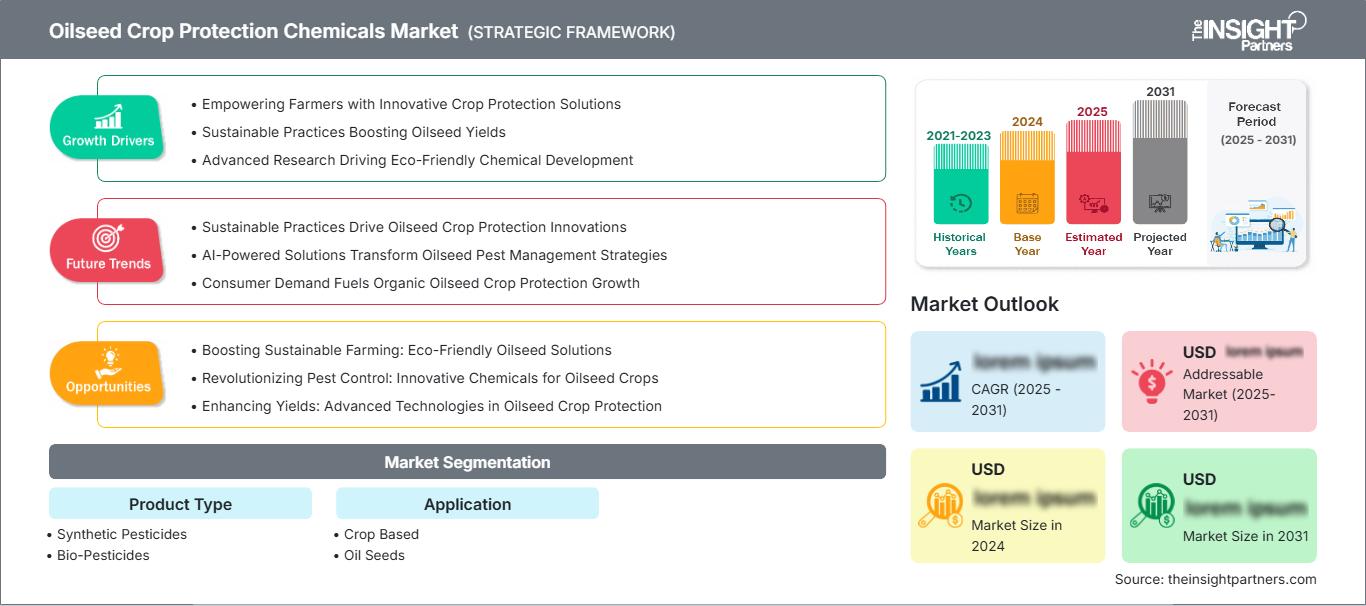
Oilseed Crop Protection Chemicals Market: Strategic Insights
Regional Insights
North America Oilseed crop protection chemicals market
North America is estimated to hold 24–28% share in 2025 and grow at a 4.0–4.6% CAGR through 2034. The Oilseed crop protection chemicals market share is supported by soybean, canola and sunflower production, with the US representing the largest regional demand center. USDA identifies soybeans as the dominant U.S. oilseed, accounting for more than 90% of national oilseed production.
Product adoption is closely connected with seed traits, crop rotation and retailer agronomy. Residual herbicides, fungicides and biological treatments are gaining strategic importance as growers seek yield protection with fewer application failures. BASF SE, Bayer CropScience AG, Corteva Agriscience, FMC Corporation, Nufarm Limited and Valent BioSciences LLC maintain strong regional relevance, while regulatory scrutiny encourages stewardship and integrated programs.
U.S. Oilseed crop protection chemicals Market
The US represents 68–72% of North America in 2025 and is expected to grow at a 3.9–4.5% CAGR through 2034. Soybeans are the central demand engine, with crop protection decisions increasingly shaped by herbicide resistance, disease outbreaks and input-cost discipline. USDA identifies soybeans, cottonseed, canola, peanuts and sunflower among major U.S. oilseed crops.
Bayer CropScience AG, BASF SE, Corteva Agriscience, FMC Corporation, ADAMA Agricultural Solutions Ltd, Nufarm Limited and Valent BioSciences LLC participate across herbicides, fungicides, biologicals and seed-linked systems. Product launches increasingly emphasize residual control and multiple modes of action. Corteva’s recent soybean portfolio expansion illustrates how suppliers are addressing resistance and application flexibility through differentiated preemergence technologies.
Europe Oilseed crop protection chemicals Market
Europe is estimated at 20–24% share in 2025 and is projected to expand at a 3.6–4.2% CAGR. Germany and France lead regional oilseed cultivation, with the UK, Italy and Spain contributing important rapeseed, sunflower and specialty oilseed demand. Regulation and integrated pest management strongly influence product selection.
The UK market emphasizes rapeseed protection, resistance stewardship and application efficiency. Germany combines intensive oilseed production with strict environmental expectations. France has a large rapeseed base and growing interest in biological alternatives. Italy and Spain support sunflower and other oilseed applications, particularly where drought and pest pressure raise crop-protection requirements. Europe therefore favors selective products and integrated programs.
APAC Oilseed crop protection chemicals Market
APAC is estimated at 32–36% share in 2025 and is expected to grow at a 4.8–5.5% CAGR. China is the leading market, followed by India, Japan, South Korea and Australia. Soybean, rapeseed, peanut and sunflower cultivation create diverse protection needs.
Industrialization, rising food and feed demand, domestic oilseed production policies and modernization of farm practices support adoption. China combines large production with intensive crop-protection use, while India offers expansion potential through soybean and groundnut cultivation. Australia adds canola demand, particularly for broadacre weed and disease management.
Middle East & Africa Oilseed crop protection chemicals Market
Middle East and Africa demand is developing from a smaller base, supported by oilseed diversification, irrigation investment and food-security strategies. Saudi Arabia and the UAE emphasize controlled production and efficient water use, while South Africa has a mature commercial farming sector.
Rest-of-MEA markets remain fragmented, creating opportunities for distributors and products suited to heat, drought and variable pest pressure. Growth is expected to remain supported by infrastructure development and agricultural modernization, although affordability, registration timelines and limited farm-level access can constrain adoption.
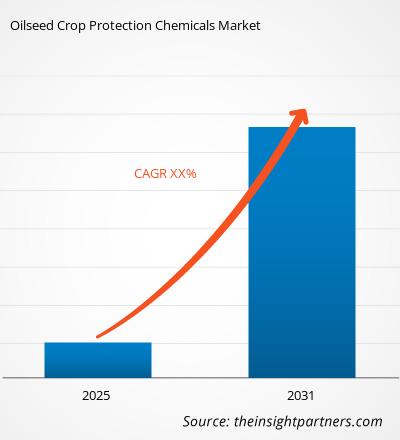
Segmentation Analysis
Product Type
Product Type is expected to grow at a 4.0–4.5% CAGR during 2026–2034. The Oilseed crop protection chemicals market scope includes synthetic pesticides and bio-pesticides as the two defined product categories. Synthetic pesticides remain the commercial foundation because they provide predictable efficacy, established registrations and broad compatibility with large-scale oilseed production. Bio-pesticides are expanding as resistance management, residue concerns and integrated pest management increase their strategic relevance.
- Synthetic Pesticides remain the dominant category because herbicides and fungicides deliver consistent control across large commercial acreage. Demand is strongest where weed resistance, disease pressure and narrow application windows require dependable performance.
- Bio-Pesticides are gaining adoption through microbial, botanical and biological modes of action. Their strategic value is highest in integrated programs where growers seek resistance rotation, residue reduction and improved compatibility with sustainability objectives.
Application
Application is projected to expand at a 4.1–4.6% CAGR during 2026–2034. Crop Based applications cover protection requirements across broader crop systems, while Oil Seeds represent the directly relevant demand pool for soybean, rapeseed, sunflower and related production. Application decisions increasingly depend on crop stage, weather, resistance status and expected commodity returns.
- Crop Based applications retain broad commercial relevance because suppliers can leverage formulations and registrations across multiple crops. Cross-crop portfolios help distributors improve inventory efficiency while growers gain familiar application technologies.
- Oil Seeds applications remain strategically important because soybean, rapeseed, sunflower and peanut production require coordinated weed, disease and insect management. Higher yield-value sensitivity supports recurring spending on preventive and curative programs.
Opportunity Snapshot
| Application | Revenue Contribution | Trend Tag | Adoption Stage |
| Crop Based | Medium | Cross-Crop Programs | Mature |
| Oil Seeds | High | Yield Protection | Scaling |
Oilseed Crop Protection Chemicals Market Growth Drivers and Impact Analysis
Rising Oilseed Demand Is Increasing the Value of Yield Protection
Global demand for vegetable oils, protein meal and biofuel feedstocks is strengthening the economic importance of reliable oilseed yields. OECD-FAO projects continued growth in oilseed production, consumption and trade through 2034, increasing the commercial value of protecting planted acreage from avoidable losses. Soybean remains especially influential because it serves food, feed and industrial markets. For crop-protection suppliers, this expands the addressable need for herbicides, fungicides, insecticides and seed-treatment solutions across production cycles. Higher yield expectations also encourage growers to protect crop potential rather than rely only on corrective applications. The resulting market impact is a shift toward preventive programs, residual chemistry, disease forecasting and integrated crop management, particularly where commodity margins justify multiple interventions.
Herbicide Resistance Is Raising Demand for Mode-of-Action Diversity
Resistance to established herbicide modes of action is increasing the technical complexity of weed management. FAO guidance increasingly emphasizes integrated pest management, combining agronomy, biological tools, digital alerts and chemistry rather than relying on a single intervention. For oilseed producers, resistance creates demand for premixes, residual products, rotation strategies and trait-compatible herbicides that provide flexibility across crop stages. This changes supplier competition because efficacy must be demonstrated within complete programs rather than through isolated active ingredients. Companies with broad pipelines can combine chemistry, seed traits and biologicals to address resistance more effectively. The commercial impact includes stronger demand for differentiated formulations and new active ingredients, while older products remain relevant when integrated into resistance-management programs.
Regulatory Stewardship Is Reshaping Product Development Economics
Regulatory pressure is changing the economics of crop-protection innovation by increasing the importance of toxicology, residue data, environmental fate and application stewardship. FAO notes that pesticides protect crops but can also create health and environmental impacts when poorly managed. Consequently, suppliers are investing in lower-risk formulations, biological alternatives, precision application and products that deliver efficacy at lower use rates. The impact is particularly visible in Europe, where regulatory expectations can influence portfolio longevity and registration priorities. Manufacturers with strong data packages and global regulatory capabilities can protect market access while smaller suppliers may focus on regional niches or biological products. Over time, stewardship requirements are likely to favor products that combine reliable field performance with measurable environmental benefits and clear application protocols.
Oilseed Crop Protection Chemicals Market Future Trends
Program-Based Crop Protection Will Replace Product-Centric Decisions
Future purchasing decisions will increasingly center on complete protection programs rather than individual pesticide products. These Oilseed crop protection chemicals market trends will involve combining seed traits, residual herbicides, foliar fungicides, biologicals, scouting data and weather intelligence into crop-stage-specific protocols. This approach can improve timing and reduce unnecessary applications while preserving yield potential. Digital agronomy platforms will increasingly connect field observations with product recommendations, resistance-management rules and application windows. For suppliers, the implication is a move toward bundled technical propositions and outcome-oriented agronomy rather than simple product differentiation. Companies able to integrate chemistry with biologicals and data services should gain stronger customer relationships. The trend will also increase the importance of compatibility testing, tank-mix guidance and field validation across different soil, weather and cultivar conditions.
Biologicals Will Become Integrated Components of Conventional Programs
Bio-pesticides are likely to progress from niche alternatives toward routine components of integrated oilseed protection programs. Their role will not necessarily be to replace synthetic chemistry across all conditions, but to complement it through resistance rotation, preventive disease management and residue-sensitive applications. Advances in microbial discovery, fermentation, formulation stability and shelf life should improve consistency and expand commercial viability. Regulatory incentives and retailer sustainability requirements may further support adoption where biological products demonstrate dependable field performance. This trend favors companies that can combine biological R&D with established formulation, registration and distribution capabilities. As product portfolios mature, biologicals may increasingly be selected according to compatibility with conventional chemistry, crop stage, disease forecast and environmental conditions rather than solely on their sustainability positioning.
Oilseed Crop Protection Chemicals Market Opportunities
Localized Formulation and Registration Platforms in Emerging Oilseed Regions
Emerging oilseed regions offer opportunities for suppliers that localize formulations, registrations and technical support rather than exporting standardized portfolios unchanged. Oilseed crop protection chemicals market Forecasts indicate attractive opportunities in India, China, Brazil and parts of Southeast Asia, where different crops, pest complexes, application practices and regulatory requirements require tailored solutions. A localized approach can improve product-market fit while reducing adoption barriers caused by unfamiliar formulations or inappropriate use patterns. Suppliers can prioritize active ingredients with broad regional relevance, then adapt concentration, formulation type and packaging to local distribution systems. Partnerships with regional manufacturers, cooperatives and agronomy networks can accelerate field validation and market access. This model can build defensible positions without requiring a full global commercial footprint.
Integrated Digital and Biological Solutions for Premium Oilseed Production
Premium oilseed production creates an opportunity to combine digital scouting, biological products and selective chemistry into higher-value service models. Disease and pest alerts can identify fields requiring intervention, while biological treatments can be positioned within preventive programs and conventional products reserved for higher-pressure situations. Suppliers can partner with agronomic platforms, equipment manufacturers and distributors to connect recommendations with application records and field outcomes. The strongest opportunity is likely where growers already use precision agriculture and have sufficient crop value to justify monitoring costs. Over time, performance data can support more targeted product positioning, improve resistance management and create recurring service relationships around crop protection rather than one-time product transactions.
Recent Developments
- July 31, 2026: Corteva Agriscience announced Enclosa herbicide for soybean growers, combining encapsulated acetochlor and cloransulam to provide a new preemergence weed-control option with residual activity. The product received U.S. EPA approval and was entering state approval processes, reinforcing Corteva’s focus on diversified soybean herbicide programs and resistance-management flexibility.
- October 14, 2025: BASF SE announced U.S. EPA approval of Zorina fungicide for soybeans, canola and dry beans. The product combines Endura and Revysol technologies to address disease pressure including white mold, strengthening BASF’s disease-management portfolio across major oilseed applications and providing another option for growers managing yield-limiting diseases.
Frequently Asked Questions

- Comprehensive Market Sizing and Forecast Analysis
- Detailed Segmentation Analysis
- In-Depth Market Dynamics Assessment
- Regional and Country-Level Insights
- Competitive Landscape and Company Benchmarking
- Strategic Business Intelligence
Recent Reports
Testimonials

The Insight Partners provided valuable market intelligence that supported our global go-to-market strategy. Their team was professional, responsive, and attentive to our feedback, providing thoughtful analysis and helpful methodological clarifications throughout the project.
Junmo Kim Chief Financial Officer (CFO), Enertech Co., Ltd.
The Insight Partners' SCADA System Market report is comprehensive, with valuable insights on current trends and future forecasts. The team was highly professional, responsive, and supportive throughout. We are very satisfied and highly recommend their services.
RAN KEDEM Partner, Reali Technologies LTDs
I requested a report on a very specific software market and the team produced the report in a few days. The information was very relevant and well presented. I then requested some changes and additions to the report. The team was again very responsive and I got the final report in less than a week.
JEAN-HERVE JENN Chairman, Future Analytica
We worked with The Insight Partners for an important market study and forecast. They gave us clear insights into opportunities and risks, which helped shape our plans. Their research was easy to use and based on solid data. It helped us make smart, confident decisions. We highly recommend them.
PIYUSH NAGPAL Sr. Vice President, High Beam Global
The Insight Partners delivered insightful, well-structured market research with strong domain expertise. Their team was professional and responsive throughout. The user-friendly website made accessing industry reports seamless. We highly recommend them for reliable, high-quality research services
YUKIHIKO ADACHI CEO, Deep Blue, LLC.
This is the first time I have purchased a market report from The Insight Partners.While I was unsure at first, I visited their web site and felt more comfortable to take the risk and purchase a market report.I am completely satisfied with the quality of the report and customer service. I had several questions and comments with the initial report, but after a couple of dialogs over email with their analyst I believe I have a report that I can use as input to our strategic planning process.Thank you so much for taking the extra time and making this a positive experience.I will definitely recommend your service to others and you will be my first call when we need further market data.
JOHN SUZUKI President and Chief Executive Officer, Board Director, BK Technologies
I wish to appreciate your support and the professionalism you displayed in the course of attending to my request for information regarding to infectious disease IVD market in Nigeria. I appreciate your patience, your guidance, and the fact that you were willing to offer a discount, which eventually made it possible for us to close a deal. I look forward to engaging The Insight Partners in the future, all thanks to the impression you have created in me as a result of this first encounter.
DR CHIJIOKE ONYIA MANAGING DIRECTOR, PineCrest Healthcare Ltd.Reason to Buy
- Informed Decision-Making
- Understanding Market Dynamics
- Competitive Analysis
- Identifying Emerging Markets
- Customer Insights
- Market Forecasts
- Risk Mitigation
- Boosting Operational Efficiency
- Strategic Planning
- Investment Justification
- Tracking Industry Innovations
- Aligning with Regulatory Trends





 Get Free Sample for