
Central Nervous System Stimulant Drugs Market Share, Size & Demand by 2034
Coverage: By Type (amphetamine, caffeine, nicotine, methamphetamine, other); Application (ADHD, sleeping disorder, depression, obesity, respiratory depression); End Use (Children, Adult), and Geography (North America, Europe, Asia Pacific, and South and Central America)
- Status : Data Released
- Report Code : TIPRE00014224
- Category : Life Sciences
- No. of Pages : 150
- Available Report Formats :


- Last update date : September 28, 2026


2025 Market Size
US$ 10.99 Bn
Base year value
2034 Forecast
US$ 16.81 Bn
Projected by 2034
CAGR 2026-2034
4.83 %
Growth rate
Addressable Market
US$ 126.15 Bn
(2026-2034)
The Central Nervous System Stimulant Drugs Market was valued at US$ 10.99 Billion in 2025 and is projected to reach US$ 16.81 Billion by 2034. The market is expected to register a CAGR of 4.83% during 2026–2034. Demand is supported by sustained treatment requirements across attention-deficit/hyperactivity disorder, sleeping disorders, depression, obesity, and respiratory depression, alongside expanding recognition of neurological and behavioral conditions among children and adults.
Within North America, the Central Nervous System Stimulant Drugs Market size is estimated to expand at a CAGR of 4.5–5.0% during 2026–2034. High diagnosis rates for attention-deficit/hyperactivity disorder, established reimbursement pathways, and broad access to specialist care underpin regional demand. Continued adoption of extended-release formulations and increasing treatment initiation among adults are also reshaping prescribing patterns, although controlled-substance regulations and recurring supply constraints influence product availability.
Central Nervous System Stimulant Drugs Market Assessment and Insights
- North America: The region accounted for a 42–45% Central Nervous System Stimulant Drugs Market share in 2025 and is projected to record a CAGR between 4.5–5.0% during 2026–2034, supported by high ADHD diagnosis rates, specialist access, and established pharmaceutical distribution.
- US: The country represented 86–89% of North American revenue in 2025 and is expected to grow at a CAGR between 4.6–5.1% during 2026–2034.
- Europe: Europe held a 27–30% share in 2025 and is forecast to register a CAGR between 4.0–4.5% during 2026–2034. Germany, the UK, France, Italy, and Spain remain leading national markets.
- Asia Pacific: Asia Pacific represented a 20–23% share in 2025 and is projected to expand at a CAGR between 5.5–6.0% during 2026–2034, led by China, Japan, India, South Korea, and Australia.
- Largest Segment: Amphetamine accounted for a 47–50% market share in 2025 and is expected to register a CAGR between 4.7–5.2% during 2026–2034, reflecting extensive ADHD prescribing.
- High Growth Segment: Adults represented a 55–58% market share in 2025 and are projected to register a CAGR between 5.2–5.7% during 2026–2034 as recognition of adult ADHD increases.
- Key companies analyzed in detail: GSK plc, Johnson & Johnson Services, Inc., Novartis AG, Pfizer Inc., Teva Pharmaceutical Industries Ltd., Astellas Pharma Inc., Biogen Inc., UCB Pharma S.A., Eli Lilly and Company, and F. Hoffmann-La Roche Ltd.
Source: The Insight Partners' analysis based on proprietary research, government publications, company annual reports, investor presentations, industry databases, and expert interviews.
There has been a transition in product development from quick acting oral drugs towards extended release tablets, capsules, liquids, orally dispersible formulations and timed delivery systems. The focus here is on achieving morning effect, sustained control of symptoms during the day and fewer doses. Factors affecting manufacturing include active pharmaceutical ingredient quotas, controlled substance issues, quality check-ups, and high production concentration. Generic competition ensures accessibility but makes supply availability a competitive advantage due to sophisticated release technologies and controlled procurement processes.
During the forecast period, there will be increasing commercialization opportunities in Asia Pacific region and some selected European countries due to increased clinical awareness and improved diagnosis. Investments will be geared towards innovative delivery platforms, children-friendly dosage forms, adult-based treatments and digitalized adherence programs. Emphasis on pharmacovigilance, growth monitoring, misuse prevention and proper prescribing by regulators will favor companies that generate solid evidence. Collaborations with specialists, pharmacies, schools and telemedicine service providers may help in maintaining continuity and proper patient identification.
Central Nervous System Stimulant Drugs Market Report Scope
| Report Attribute | Details |
|---|---|
| Market size in 2025 | US$ 10.99 Billion |
| Market Size by 2034 | US$ 16.81 Billion |
| Global CAGR (2026 - 2034) | 4.83% |
| Historical Data | 2021-2024 |
| Forecast period | 2026-2034 |
Central Nervous System Stimulant Drugs Market Analysis
Rising diagnosis of attention-deficit/hyperactivity disorder is the principal contributor to Central Nervous System Stimulant Drugs Market growth, with treatment increasingly extending from childhood into adulthood. The US Centers for Disease Control and Prevention estimates that ADHD affects 9.8% of children and 4.4% of adults, illustrating a substantial addressable population. There is also demand in relation to narcolepsy and some obesity disorders that require stimulant use under clinical supervision.
This supply chain includes the raw materials suppliers, controlled substance drug manufacturers, formulation companies, distributors, pharmacies, prescribing physicians, payers, and regulatory agencies. The supply chain is very sensitive to any miscalculations in the production quotas, manufacturing issues, and distributor allocation. Extended release products are critical due to fewer school or work day doses required.
Central Nervous System Stimulant Drugs Market analysis reveals that the competition occurs in terms of branded innovation, complicated generics, and lifecycle management drugs. Teva Pharmaceutical Industries Ltd. holds both manufacturing and generics expertise, whereas Johnson & Johnson Services, Inc., Novartis AG, GSK plc, and Pfizer Inc. offer neuroscience expertise or commercialization platforms. On the other hand, UCB Pharma S.A. and Biogen Inc. augment the general neurological research environment.
Capital allocation trends now focus on release engineering, abuse-deterrent technology, pharmacokinetic difference, pediatric indication, and real world safety data. The companies like Eli Lilly and Company, Astellas Pharma Inc., and F. Hoffmann-La Roche Ltd. have research platforms for developing neurological pipeline products. However, their portfolio emphasis is different. Increasing competitive position will be built on supply, access, pediatric/adult balance, and labeling/monitoring compliance.
● REPORT CUSTOMIZATION
Tailor This Report To Align With Your Specific Business Requirements
This report can be customized to align precisely with your business objectives, scope, and target markets. Customization options include tailored segmentation, geography, competitive analysis, and strategic insights to support informed decision-making.
Customize This Report →WHAT YOU CAN ADJUST
- ● Segmentations
- ● Geography
- ● Competitive Analysis
- ● Language Preferences
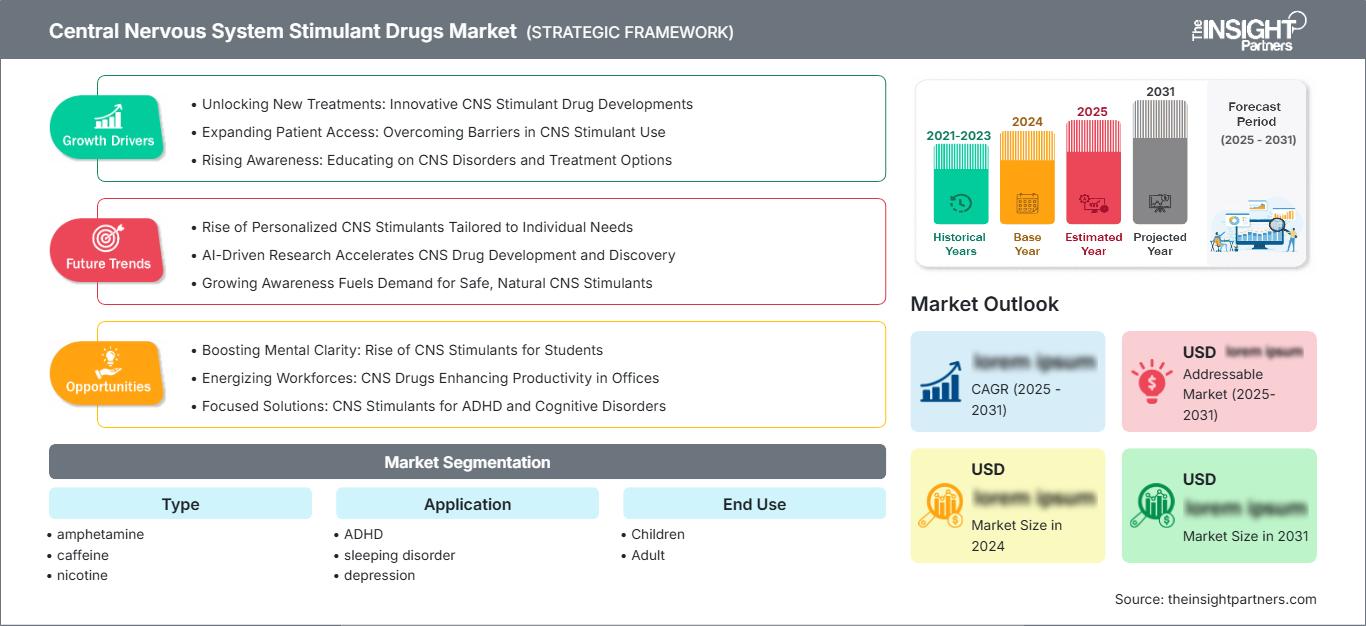
Central Nervous System Stimulant Drugs Market: Strategic Insights
Regional Insights
North America Central Nervous System Stimulant Drugs Market
North America held a 42–45% Central Nervous System Stimulant Drugs Market share in 2025 and is projected to expand at a CAGR of 4.5–5.0% during 2026–2034. Advantages in the region include presence of diagnostics guidelines, well-developed network of mental health care, high prescription penetration rate, and insurance coverage of branded and generic medicines. The demand focuses on ADHD, but narcolepsy and certain types of eating disorders add volume.
Adult prescribing trends create a shift in traditional children-focused market. Extended release therapy caters to adult needs of adherence at work and managing symptoms throughout the day, whereas liquids and chewables address problems of swallowing in children. Issues of controlled substances, including quotas, shortages, diversion and safety in obesity create restrictions in operation. Thus, companies with backup production, good demand forecasting and logistics systems have an advantage in the region.
U.S. Central Nervous System Stimulant Drugs Market
The US accounted for 86–89% of North American revenue in 2025 and is projected to grow at a CAGR of 4.6–5.1% during 2026–2034. High diagnostic rates, presence of specialists, screening in schools, and adult treatments help in maintaining high prescription rates. FDA-approved branded and generic formulations are available in several formulations such as immediate-release, extended-release, liquid, chewable, and orally-disintegrating forms to provide the prescribers various titration options.
Participants in the neuroscience market including Teva Pharmaceutical Industries Ltd., Johnson & Johnson Services, Inc., Pfizer Inc., Eli Lilly and Company, among others have either manufacturing or research activities in the country. The leading application is attention deficit hyperactivity disorder, while narcolepsy and binge-eating applications present smaller areas of opportunity. FDA-wide class warnings, DEA schedule, restrictions in dispensing, and shortage of products affect the access. The companies are hence focusing on building resilient supply chains, post-market surveillance, patient education, and formulation differentiation.
Europe Central Nervous System Stimulant Drugs Market
Europe represented a 27–30% share in 2025 and is projected to register a CAGR of 4.0–4.5% during 2026–2034. Germany is the dominant national market, helped by specialized prescription and reimbursement structure. In the UK, there is NHS guidance coupled with an increase in ADHD referrals among adults, though wait lists may hinder diagnosis and treatment commencement.
Germany enjoys the advantage of well-established psychiatric care, pharmacy access, evidence-based prescription, and stringent controlled drug management to secure monitored consumption. It enjoys size, reimbursement system, and generics for leadership in the region. France keeps up its relative prudence with regards to prescription of stimulants, but increased knowledge of neurodevelopmental disorders allows for progressive adoption through specialized routes.
Italy and Spain exhibit controlled growth owing to physician education, pediatric screening, and mental health treatment in adults. National reimbursement policy and prescription limitations bring about differences in treatment availability within nations. Across Europe, there is demand for long-acting medications due to convenience of administration. Supply availability, multilingual documentation, pharmacovigilance, and compliance with national controlled drug legislation are the essential factors for market penetration and success of the product.
APAC Central Nervous System Stimulant Drugs Market
Asia Pacific held a 20–23% share in 2025 and is forecast to expand at a CAGR of 5.5–6.0% during 2026–2034. Japan tops regional revenues due to existing neurological care services, controlled access and relatively advanced insurance reimbursement system. China and India have future potential due to improved diagnosis despite the problems associated with stigma, limited number of specialists, and controlled substances regulations.
South Korea and Australia are helping adopt new treatments via clinical guidelines and rising awareness among adults. Regional development of healthcare infrastructure, local manufacturing, and digital consultations increases accessibility of patients. Policy reform and training of specialists will be crucial for responsible prescription and pharmacovigilance.
Middle East & Africa Central Nervous System Stimulant Drugs Market
The Middle East and Africa market is expected to register a CAGR of 3.0–3.5% during 2026–2034. Saudi Arabia leads regional demand as healthcare modernization, specialist hospitals, and insurance expansion improve psychiatric access. The UAE benefits from private healthcare infrastructure and internationally trained clinicians, while controlled-import procedures influence availability.
South Africa represents the principal sub-Saharan market through established pharmacy networks and private medical coverage. Across the Rest of MEA, limited diagnosis, affordability constraints, and uneven distribution restrict uptake. Investment in hospital capacity, digital health, and pharmaceutical logistics could gradually improve access.
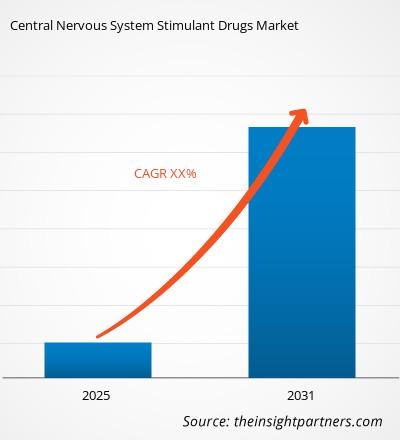
Segmentation Analysis
Type
Type is projected to register a CAGR of 4.6–5.1% during 2026–2034. The Central Nervous System Stimulant Drugs Market scope by type encompasses amphetamine, caffeine, nicotine, and methamphetamine. Prescription amphetamine dominates regulated therapeutic demand, while caffeine and nicotine span broader consumer and cessation-related contexts. Clinical governance, dependence risks, route of administration, and duration of action determine adoption across these pharmacologically distinct categories.
- Amphetamine: Amphetamine holds the strongest commercial position because of widespread use in ADHD and selected sleep disorders. Long-acting salts and prodrug formulations support adherence, symptom coverage, and differentiated prescribing strategies.
- Caffeine: Caffeine maintains broad demand through pharmaceutical preparations for alertness and selected respiratory applications. Familiarity, low cost, and established clinical use support volume, although commoditization limits value expansion.
- Nicotine: Nicotine products occupy a strategic role in medically supervised smoking cessation. Patches, gums, lozenges, and prescription systems serve patients seeking controlled dosing and reduced exposure to combustible tobacco.
- Methamphetamine: Methamphetamine has limited therapeutic positioning because of stringent controls and substantial misuse risk. Prescribing remains narrowly confined to selected cases requiring specialist oversight after more conventional alternatives prove unsuitable.
Application
Application is projected to grow at a CAGR of 4.7–5.2% during 2026–2034. ADHD generates the largest prescription base, supported by pediatric diagnosis and rising adult recognition. Sleeping disorders provide a specialized opportunity centered on narcolepsy and persistent daytime sleepiness. Depression, obesity, and respiratory depression remain more selective applications because alternative therapies, safety considerations, and indication-specific guidelines constrain stimulant utilization.
- ADHD: ADHD represents the central demand pool, with stimulants frequently selected for rapid symptom control. Long-acting products, individualized titration, and combined behavioral support reinforce sustained clinical relevance.
- Sleeping disorder: Sleeping disorders create specialized demand for wake-promoting treatment in narcolepsy and related conditions. Diagnosis by sleep specialists and treatment monitoring shape a comparatively concentrated, evidence-driven commercial segment.
- Depression: Stimulants may be considered selectively as adjunctive therapy in treatment-resistant or medically complex depression. Their strategic importance remains limited by alternative antidepressants, misuse concerns, and cardiovascular monitoring requirements.
- Obesity: Obesity-related use is concentrated in selected prescription products and carefully screened patients. Increasing metabolic disease awareness supports evaluation, although cardiovascular risks and competing incretin-based therapies constrain broader adoption.
- Respiratory depression: Respiratory applications remain clinically narrow and closely supervised. Demand is associated primarily with specific hospital or neonatal settings where stimulant pharmacology can support respiratory drive under established protocols.
End Use
End use is projected to record a CAGR of 4.9–5.4% during 2026–2034. Children retain substantial treatment demand because ADHD commonly emerges during school years, but adult uptake is developing faster as persistent symptoms receive greater recognition. Prescribers increasingly distinguish dosage, duration, comorbidities, cardiovascular risk, adherence needs, and misuse potential when selecting products for each age group.
- Children: Children represent an established patient population supported by school observation, pediatric assessment, and family involvement. Growth monitoring, appetite effects, sleep disruption, and age-appropriate formulations strongly influence treatment selection and persistence.
- Adult: Adults form the faster-developing end-use category as diagnosis expands among working-age populations. Full-day symptom coverage, discreet administration, comorbidity management, and continuity from pediatric care reinforce strategic importance.
Opportunity Snapshot
| End Use | Revenue Contribution (High/Medium/Low) | Trend Tag | Adoption Stage (Emerging/Scaling/Mature) |
| Children | High | Pediatric Formats | Mature |
| Adult | High | Adult Diagnosis | Scaling |
Central Nervous System Stimulant Drugs Market Growth Drivers and Impact Analysis
Increasing Recognition of Adult ADHD
Adult ADHD is evolving from a condition that was not well-recognized before into a condition with a defined pathway that involves primary care screening, psychiatry referral, and a smooth transition from pediatric services. Problems with attention, organization, and impulsivity can affect workplace performance and daily functions in a way that can motivate an otherwise unidentified adult to seek testing. This would mean that the market goes beyond the school-going children and that it is therefore wise to develop drugs that offer full-day coverage. From the business point of view, there is a higher demand for titration capability, discretion in administration, telemedicine monitoring, and balance between efficacy and absence of side effects like insomnia and loss of appetite. The above demands can be met by the manufacturer by relying on adult-specific information, educating prescribers, offering adherence support, and payer dossiers.
Expansion of Long-Acting and Patient-Friendly Formulations
Release engineering is becoming a key consideration in terms of adoption since traditional short-acting drugs could need to be repeatedly administered, provide inconsistent control of symptoms, and make administration difficult during school and working hours. The extended-release formulations available in capsules, tablets, solutions, chewable, and oral dissolving forms resolve all these issues by offering flexible administration options and longer therapy periods. Pediatric formulations help overcome difficulties associated with administration, while delayed-release drugs could address early-morning symptoms. The competitive effects are not limited to convenience since differential pharmacokinetics could improve compliance, persistency, and prescribers' trust. However, consistent drug release, food effect, dose proportionality, and manufacturability should be demonstrated. The companies capable of designing complex formulations will be able to create defensible product lines even in light of generic competitors provided that the gap in treatment exists.
Growing Diagnostic and Care Infrastructure
Greater availability of trained psychiatrists, pediatricians, neurologists, sleep specialists, and digitally enabled care channels supports earlier identification of conditions treated with stimulants. Standardized assessment tools and increased awareness among families, schools, employers, and primary care practitioners facilitate referrals, while electronic prescribing improves controlled-drug documentation. The impact is strongest in underserved urban and semi-urban populations where specialist access previously constrained diagnosis. Expanded infrastructure also supports monitoring of blood pressure, growth, sleep, appetite, adherence, and misuse indicators, enabling more responsible treatment. Pharmaceutical companies can reinforce this driver by funding nonpromotional medical education, developing validated patient-support resources, and strengthening pharmacy availability. Sustainable expansion depends on clinical quality and continuity rather than diagnosis volume alone, particularly where regulatory authorities scrutinize inappropriate prescribing and diversion.
Central Nervous System Stimulant Drugs Market Future Trends
Precision-Timed Drug Delivery
Central Nervous System Stimulant Drugs Market trends will increasingly center on formulations engineered around daily symptom patterns rather than simple duration extension. Multi-phase delivery systems may provide rapid morning onset, controlled daytime exposure, and reduced evening stimulation. Developers will apply pharmacokinetic modeling, food-effect analysis, and patient-reported timing data to optimize profiles for school, employment, and shift-work requirements. Successful products could reduce booster dosing and improve persistence, but differentiation must be clinically meaningful. Regulatory submissions will require reproducible manufacturing and robust comparative evidence. Licensing agreements between formulation specialists and established commercial organizations are likely to accelerate the geographic expansion of timed-release products across regulated markets.
Integration of Digital Monitoring with Prescribing
Digital monitoring will become more closely connected with stimulant prescribing as clinicians seek measurable information on symptoms, adherence, sleep, appetite, and treatment timing. Secure applications may collect structured patient and caregiver observations between consultations, helping physicians distinguish inadequate response from poor adherence or adverse effects. Pharmacy analytics can also identify interrupted refills and potential duplication, supporting safer controlled-drug management. Adoption will depend on privacy safeguards, clinical validation, workflow integration, and equitable access. Manufacturers may partner with healthcare providers rather than positioning applications as stand-alone products. Over time, real-world evidence generated from monitored treatment could inform payer negotiations, label expansion, and formulation design.
Central Nervous System Stimulant Drugs Market Opportunities
Build Adult-Focused Treatment and Support Platforms
Adult care pathways create an actionable investment opportunity for pharmaceutical companies, specialist networks, and digital health providers. Central Nervous System Stimulant Drugs Market Forecasts indicate that adult demand will develop faster than pediatric demand as diagnosis expands and childhood patients remain in treatment. Investors can prioritize extended-release portfolios, clinician decision support, transition programs, and adherence services designed around employment and family responsibilities. Commercial programs should address comorbid anxiety, sleep disruption, cardiovascular screening, and controlled-drug stewardship. Partnerships with primary care groups and pharmacies can reduce referral bottlenecks. Companies that demonstrate functional improvement, responsible monitoring, and predictable supply will be better placed to secure payer access and physician confidence.
Localize Complex Formulation Supply in Asia Pacific
Regional manufacturing and licensing offer a route to capture Asia Pacific demand while reducing dependence on imported finished products. Companies can invest in controlled-substance-compliant facilities, extended-release technology transfer, local bioequivalence programs, and secure distribution systems. Japan, Australia, South Korea, China, and India require different regulatory and commercialization strategies, making local partnerships valuable for dossier adaptation and physician engagement. Opportunity assessment should account for diagnostic capacity, reimbursement, scheduling rules, and cultural attitudes toward stimulant treatment. Pediatric liquids and lower-dose formats may address specific access barriers. Investors that combine manufacturing quality, pharmacovigilance, prescriber education, and reliable active ingredient sourcing can establish positions before broader diagnosis materially accelerates regional demand.
Recent Developments
- July 2026: Otsuka Pharmaceutical Co., Ltd. received US FDA approval for SIMTRIYO, a once-daily extended-release centanafadine capsule for ADHD in patients aged six years and older weighing at least 20 kilograms. The first-in-class norepinephrine, dopamine, and serotonin reuptake inhibitor demonstrated significant symptom improvement across four Phase 3 studies and awaits Drug Enforcement Administration scheduling before commercialization.
- January 2026: Granules Pharmaceuticals, Inc. received tentative US FDA approval for generic amphetamine extended-release tablets in four strengths. The product is therapeutically equivalent to DYANAVEL XR and was determined eligible for 180-day exclusivity. The approval strengthened the company’s differentiated CNS generics portfolio and followed its tentative approval for amphetamine extended-release orally disintegrating tablets in December 2025.
- October 2025: Knight Therapeutics Inc. launched JORNAY PM in Canada for children aged 6–12 years with ADHD. The evening-dosed methylphenidate formulation uses delayed-release and extended-release technology to provide symptom control from waking through the day. The launch followed Health Canada approval and an exclusive distribution agreement covering Canada and Latin America.
Frequently Asked Questions

- Comprehensive Market Sizing and Forecast Analysis
- Detailed Segmentation Analysis
- In-Depth Market Dynamics Assessment
- Regional and Country-Level Insights
- Competitive Landscape and Company Benchmarking
- Strategic Business Intelligence
Recent Reports
Testimonials

The Insight Partners provided valuable market intelligence that supported our global go-to-market strategy. Their team was professional, responsive, and attentive to our feedback, providing thoughtful analysis and helpful methodological clarifications throughout the project.
Junmo Kim Chief Financial Officer (CFO), Enertech Co., Ltd.
The Insight Partners' SCADA System Market report is comprehensive, with valuable insights on current trends and future forecasts. The team was highly professional, responsive, and supportive throughout. We are very satisfied and highly recommend their services.
RAN KEDEM Partner, Reali Technologies LTDs
I requested a report on a very specific software market and the team produced the report in a few days. The information was very relevant and well presented. I then requested some changes and additions to the report. The team was again very responsive and I got the final report in less than a week.
JEAN-HERVE JENN Chairman, Future Analytica
We worked with The Insight Partners for an important market study and forecast. They gave us clear insights into opportunities and risks, which helped shape our plans. Their research was easy to use and based on solid data. It helped us make smart, confident decisions. We highly recommend them.
PIYUSH NAGPAL Sr. Vice President, High Beam Global
The Insight Partners delivered insightful, well-structured market research with strong domain expertise. Their team was professional and responsive throughout. The user-friendly website made accessing industry reports seamless. We highly recommend them for reliable, high-quality research services
YUKIHIKO ADACHI CEO, Deep Blue, LLC.
This is the first time I have purchased a market report from The Insight Partners.While I was unsure at first, I visited their web site and felt more comfortable to take the risk and purchase a market report.I am completely satisfied with the quality of the report and customer service. I had several questions and comments with the initial report, but after a couple of dialogs over email with their analyst I believe I have a report that I can use as input to our strategic planning process.Thank you so much for taking the extra time and making this a positive experience.I will definitely recommend your service to others and you will be my first call when we need further market data.
JOHN SUZUKI President and Chief Executive Officer, Board Director, BK Technologies
I wish to appreciate your support and the professionalism you displayed in the course of attending to my request for information regarding to infectious disease IVD market in Nigeria. I appreciate your patience, your guidance, and the fact that you were willing to offer a discount, which eventually made it possible for us to close a deal. I look forward to engaging The Insight Partners in the future, all thanks to the impression you have created in me as a result of this first encounter.
DR CHIJIOKE ONYIA MANAGING DIRECTOR, PineCrest Healthcare Ltd.Reason to Buy
- Informed Decision-Making
- Understanding Market Dynamics
- Competitive Analysis
- Identifying Emerging Markets
- Customer Insights
- Market Forecasts
- Risk Mitigation
- Boosting Operational Efficiency
- Strategic Planning
- Investment Justification
- Tracking Industry Innovations
- Aligning with Regulatory Trends





 Get Free Sample for