Rising Working Women Population Drives Baby Food Market Growth
According to our latest study on "Baby Food Market Forecast to 2031, Global and Regional Growth Opportunity Analysis – by Product Type, Category, Age Group, and Distribution Channel," the market was valued at US$ 74.33 billion in 2024 and is expected to reach US$ 103.01 billion by 2031; it is estimated to register a CAGR of 4.8% during 2025–2031. The report highlights factors contributing to the baby food market size and prominent players, along with their developments in the market.
The number of working women increases annually, and they maintain their careers and motherhood, which demands nutritious, ready-to-eat products that will help them in the development of their babies and that are able to cope with their busy schedules. The tendency drives the buying behavior, as working women become more dependent on the supermarkets and the internet to provide them with a range of baby foods to buy, which is increasing the sales in the market. To access the changing needs of consumers, manufacturers are constantly innovating with portable packaging and different flavors. The response to this increase in this demographic is retailers increasing shelf space and inventory to cater to this growing demographic, which helps the baby food market growth.
Baby Food Market Breakdown – by Region
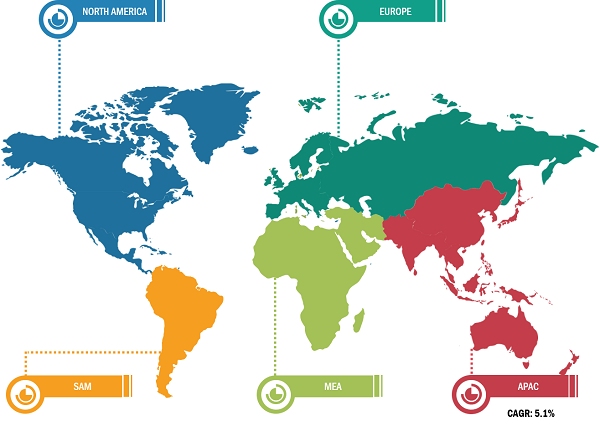
Baby Food Market Growth & Future Trends 2031
Download Free SampleBaby Food Market Size and Forecast (2021 - 2031), Global and Regional Share, Trend, and Growth Opportunity Analysis Report Coverage: By Product Type (Milk Formula, Fruit and Vegetable Puree, Baby Cereals and Porridge, Pureed Meat, Yogurt, Yogurt Melts, Biscuits and Cookies, Teether Crackers/Cookies, Puffed Baby Snacks, Baby Snack Bars, Juices, Shakes, and Smoothies, and Others), Category (Organic and Conventional), Age Group (Upto 6 Months, 6-10 Months, 10-16 Months, 16-24 Months, and 24-36 Months), Distribution Channel (Supermarkets and Hypermarkets, Convenience Stores, Pharmacies and Drugstores, Online Retail, and Others)
The baby food market analysis has been performed by considering the following segments: product type, category, age group, and distribution channel. By product type, the baby food market is segmented into milk formula, fruit and vegetable puree, baby cereals and porridge, pureed meat, yogurt, yogurt melts, biscuits and cookies, teether crackers/cookies, puffed baby snacks, baby snack bars, juices, shakes, and smoothies, and others. The milk formula segment accounted for the largest baby food market share in 2024. It is a fully nutritional alternative to breast milk, providing balanced proteins, fats, carbohydrates, vitamins, and minerals necessary for the healthy growth of the infant. It is made in stages (0-6 months, 6-12 months, and toddler) so that it can follow the physical and mental development of the child, and ensure the right consumption. In addition, there are specialized variants for lactose intolerance, allergies, and premature babies. The demand is kept alive by an increasing number of working mothers, rising disposable incomes in developing countries, and a strong trust in science-based brands. Besides, the introduction of premium organic, A2, and goat milk formulas, while very high safety standards and recommendations from pediatricians help to keep it as the first choice of millions of parents all over the world.
The baby food market trends include the development of organic and high-quality organic and clean-label formulae; the development of plant-based, A2, goat milk, and HMO-enhanced products; and the transition to sustainable and recyclable packaging. The stage-specific, allergy-free (hypoallergenic, lactose-free), and gut-health-specific variants have a fast-growing demand due to the health-conscious millennial and Gen-Z parents. E-commerce penetration, direct-to-consumer brands, and individualized subscription models are redefining distribution. Manufacturers are being compelled by tighter global regulations and pressure from retailers into BPA-free designs, mono-material pouches, paper-based tubs, and post-consumer recycled plastics, lessening excessive packaging. These eco-innovations enable the brands to achieve the goals of ESG without sacrificing safety and convenience and shelf appearance in a category that is becoming more competitive and sustainability-focused.
In 2024, APAC accounted for the largest baby food market share due to a high birth rate in China, India, Indonesia, and Pakistan, escalating urbanization, as well as an increase in the number of working women. Rising middle class, increasing disposable incomes, and inclination for premium infant nutrition contribute to surging demand for milk formula (especially across Tier-1 and Tier-2 cities) in the region. Modern trade (hypermarkets and supermarkets), e-commerce, and q-commerce delivery services have increased access, as strong distribution networks on global and local brands ensure broad availability of stage-based, organic, and specialized formats across a wide range of prices in this very dynamic, volume-driven market.
Nestle SA, The Hain Celestial Group Inc, Royal FrieslandCampina NV, Danone SA, Hero Group, Reckitt Benckiser Group Plc, Abbott Laboratories, China Mengniu Dairy Co Ltd, Little Spoon Inc, and Nature's Path are among the prominent players profiled in the baby food market report. These players are focusing on providing high-quality products to fulfill customer demand. They are adopting strategies such as new product launches, capacity expansions, partnerships, and collaborations to stay competitive in the baby food market.
In terms of category, the baby food market is categorized into organic and conventional. On the basis of age group, the market is categorized into up to 6 months, 6-10 months, 10-16 months, 16-24 months, and 24-36 months. Based on distribution channel, the baby food market is segmented into supermarkets and hypermarkets, convenience stores, pharmacies and drugstores, online retail, and others.
The geographical scope of the baby food market report focuses on North America, Europe, Asia Pacific, the Middle East & Africa, and South & Central America. The market in North America is segmented into the US, Canada, and Mexico. The market in Europe is categorized into Germany, France, Italy, the UK, Spain, and the Rest of Europe. The baby food market in Asia Pacific is divided into Australia, China, India, Japan, South Korea, and the Rest of Asia Pacific. The baby food market in the Middle East & Africa is classified into South Africa, Saudi Arabia, the UAE, and the Rest of the Middle East & Africa. The market in South & Central America is segmented into Brazil, Argentina, and the Rest of South & Central America.
Contact Us
Phone: +1-646-491-9876
Email ID: sales@theinsightpartners.com